Phoenix Wright: Ace Attorney – Dual Destinies was an amazing game. Although the gameplay was a bit too easy, the story, characters, and humor more than made up for it. One thing that disappointed many fans, however, was its digital-only status in the West.
The only way to play an actual physical copy of Dual Destinies is to import the Japanese version, and due to the region-lock, you’d need a Japanese 3DS to play it on (unlike Ace Attorney Investigations 2, where you’d just need to know Japanese).
Fans begged, complained, and occasionally engaged in illogical boycotts to try to get a retail release in the West, but it didn’t work.
Probably.
Yesterday, I was thrilled to learn that the Ace Attorney 3DS themes released in Japan are now available in North America, with the European release to follow.
There are four. Two for the Phoenix Wright Trilogy, which also saw a digital-only localization, and two for Dual Destinies. They look and sound fantastic, but one oddity in the theme showcase videos stands out.
In the two videos for the Trilogy collection, you can see the icon for the Phoenix Wright Trilogy as it scrolls through. Since this is the Western version, it’s clearly for the digital game, as a square icon.
Likewise, the Dual Destinies theme videos show the icon for Dual Destinies… except it’s the cartridge-shaped icon used for a physical game inserted in the 3DS.
These videos are announcing the English release of the themes (available for $2 each, if you want them) and the interface is clearly English? So why show a version of Dual Destinies that isn’t available in English?
It could just be an oversight on Capcom’s part when making the videos. On the other hand, it could be a hint that we’ll see a Dual Destinies retail release in the West! And if that happens, maybe things bode well for the upcoming Dai Gyakuten Saiban and our much-awaited Ace Attorney Investigations 2!
In the wake of the shocking Final Fantasy VII remake announcement at E3, some of the excitement has faded into worry. Director Tetsuya Nomura has made it clear that the FFVII remake won’t just be the same game with prettier graphics and voice acting, but a true remake.
Fans who really just wanted Final Fantasy VII with modern graphics started to worry then.
Final Fantasy VII’s combat is a major source of contention. Should it be turn-based like the original or become an action RPG like Final Fantasy XV? If turn-based, should it use its normal ATB system or adopt something closer to Final Fantasy XIII’s style?
Fans can argue nonstop about these issues without reaching agreement, but two arguments against turn-based combat baffle me.
Is Turn-Based Combat Outdated?
You’ll hear this one the most. Fans of making it an ARPG claim turn-based combat was fine back when Final Fantasy VII came out, but now is an outdated, archaic system that doesn’t belong in a modern game.
This is absurd. Even if turn-based battles started because of tech limitations, they’ve since become a viable style of gameplay. I have nothing against action RPGs. Some of my favorite games are ARPGs! But I love turn-based RPGs, and acting like they’re just a primitive form of ARPG is frustrating.
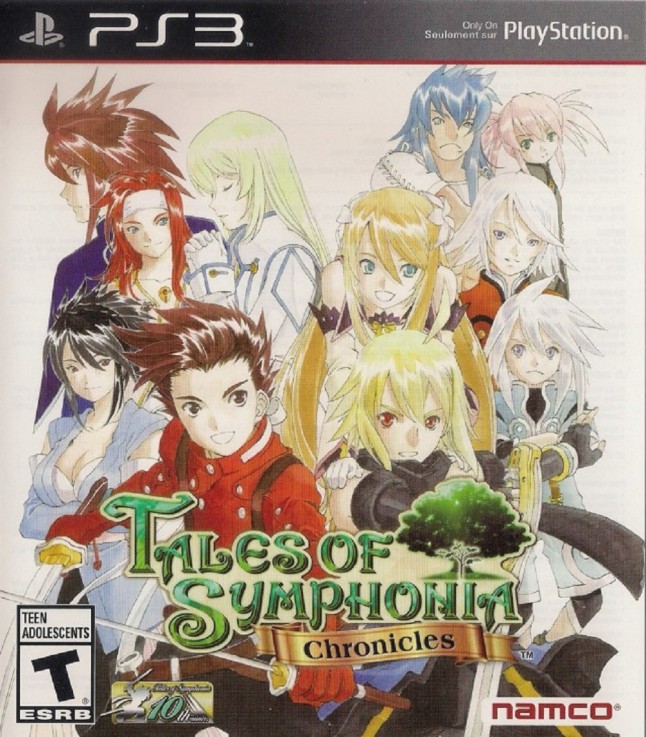
ToS remade as a turn-based RPG would be just as weird.
ToS remade as a turn-based RPG would be just as weird.How would it be if Uncharted was remade as a first-person shooter, or XCOM as real-time strategy? Making FFVII an action RPG changes its genre.
And if turn-based combat just doesn’t fit modern gaming, why were there multiple anticipated turn-based RPGs at E3? Why do fans love Bravely Default and its upcoming sequel? Why did Square Enix remaster Final Fantasy X for the PS3 and Vita and then again for the PS4? Why is Persona so popular?
Turn-based RPGs have a persistent, dedicated fanbase… and many of those fans are waiting for a turn-based Final Fantasy VII remake.
But It’s a Remake!
Okay, I can at least understand how fans of action RPGs might view turn-based combat as something clunky and needlessly slow, distancing them from the battles. This other argument, however, makes no sense to me.
Perhaps due to Nomura’s statements that this is a remake rather than a remaster, some proponents of changing Final Fantasy VII’s combat claim that the battle system must change, because this is a remake.
What?
Do remakes usually change the game’s genre? This isn’t a reboot.
To people who use this argument, it seems like there are only two extremes. The Final Fantasy VII remake can be an exact clone of the original, just with superior visuals and voice acting, or it can change the core gameplay into something completely different. Nothing in between.
That’s not true at all. When I consider how the FFVII remake should be handled, I think about the 2002 remake of the original Resident Evil, affectinately known as REmake.
Recently remastered for additional consoles
REmake is a brilliant example of not only classic survival horror, but also of how a remake can surpass the original. It took everything Resident Evil did and made it better, while remaining true to the game’s heart and soul.
On the surface, it looks like Resident Evil with newer graphics and better voice acting (and less ridiculous dialogue). The S.T.A.R.S. team still goes to the mansion and encounter zombies. You still choose to play as either Jill or Chris, with different scenarios and supporting characters depending on your choice. You still solve puzzles and unlock doors in delightful old-school survival horror style. Even the opening cutscene follows the original.
When you really get into the game, however, the differences are numerous. Puzzles are slightly different. Notorious jump scares have been altered. Combat is enhanced by defense items, which help you in battle even though they’re limited (like all resources). Defeated zombies can now transform into the quick, deadly Crimson Heads if their bodies aren’t burned, which adds a new layer of strategy. The narrative is tweaked just slightly to accomodate the series’ later plot developments.
Most notable of all, perhaps, is the new area and its accompanying side story. REmake sends players to new locations and introduces Lisa Trevor, a powerful enemy with a haunting backstory.
My point is simple. Resident Evil’s 2002 remake took the original’s core gameplay, story, and premise, and improved it wherever it could. It remained a survival horror game and followed in the original’s footsteps. It “modernized” Resident Evil without abandoning its genre the way later installments tried to do. It truly remade an already-great game into something better.
The recent remaster even found a compromise for the oft-contested tank controls. A new control scheme was added in, but the option to play with tank controls also remained. Fans who considered tank controls clunky and those who considered them a key part of the tense gameplay could both be happy.
An ideal Final Fantasy VII remake will follow REmake’s example. It will keep the turn-based combat, the overworld, and the core gameplay of the original, but smooth everything out. The mini-game mechanics could use work. Maybe battles should be flashier, a la Wild Arms 3, which has party members and enemies run around the battle screen even though combat is entirely handled through menus.
Maybe the story will be adjusted to make later parts of the FFVII franchise fit (though there’s one scene in particular I really don’t want retconned to match Advent Children). Vincent and Yuffie could be better integrated into the story, or at least appear in the ending. They could also confirm or debunk that one theory once and for all.
Maybe a couple of new areas could be added, and encounters altered to surprise longtime fans.
This is what I want to see from the Final Fantasy VII more than anything else. I want a game that embraces classic turn-based RPG mechanics while also improving them, and updates the plot and gameplay while remaining wholly Final Fantasy VII at its core.