Operation Backlog Completion 2026
Oct 222014
 
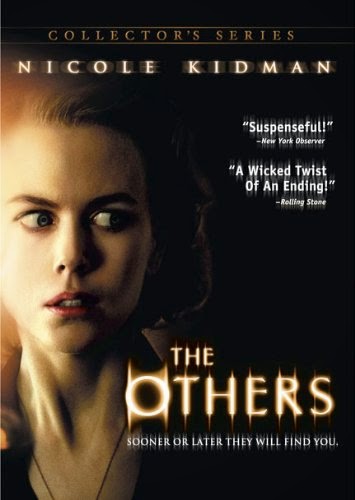
Movie cover for The Others

Judging by the excellent reviews The Others has gotten, I suspect I’m in the minority when it comes to my views on this movie. Fair warning, this review contains huge spoilers. I can’t properly discuss my feelings toward The Others without talking about plot twists and the ending.

So, spoilers ahead. Turn back now if you haven’t seen the movie yet and intend to.

All right, onto the review. My feelings through most of The Others were mixed. It had a lot of religious elements that I expected to go somewhere. I wondered if we were going into demon/exorcism territory, since there was such a strong focus on Catholicism. It didn’t. All it really did was work into the character development of the main character, Grace. I’ll get back to that in a little bit.

At first, I thought Grace would be my main complaint about the movie. I didn’t find her character very likable. In fact, in the early scenes, I questioned the movie’s description for making it sound like the servants were the creepy ones, because it seemed to me they were the normal ones suddenly stuck in an isolated house with this crazy lady.

Things changed, and my opinion changed with them.

Grace was clearly unstable and set in her ways (she tried to get into town to talk to the priest about her haunted house, failed, and then suddenly went back to not believing in the hauntings?), but my sympathy for her grew once the curtains were removed. Her dedication to protecting her children struck me, especially her anger when the servants suggested she expose the children to sunlight to see if they’d grown out of their illness. No, if the alternative to growing out of it is death, you don’t just try and see!

Overall, I liked the mood and atmosphere of the movie. It had a certain ambiguity that might have been better handled if we didn’t see the scenes of the two servants talking to one another about what was going on, but it still created a sense of uneasiness. I especially liked the fog, of course.
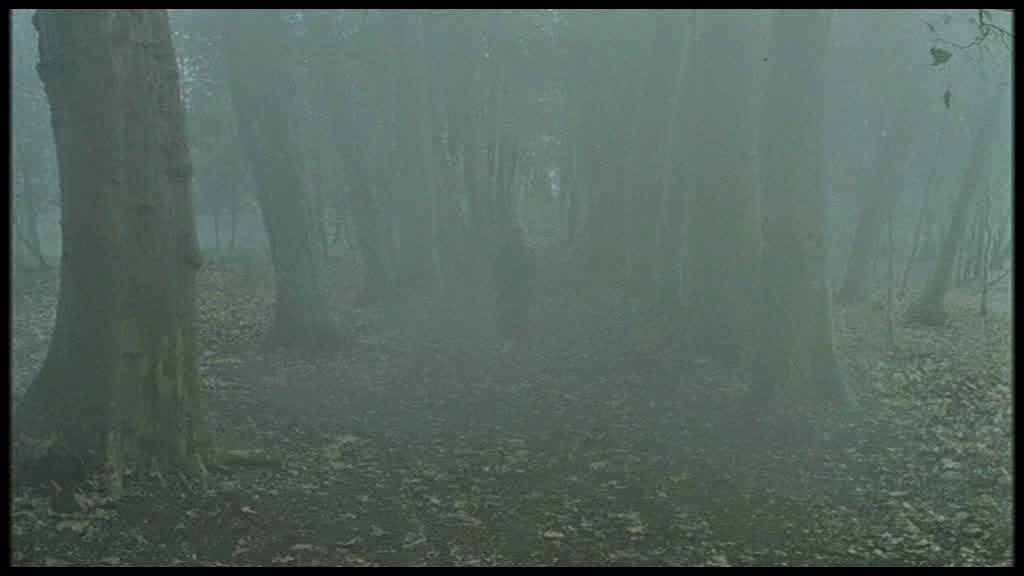
Foggy woods in The Others
Welcome to Silent Hill?

I never found the movie particularly scary, but it handled some creepy scenes very well. My absolute favorite was near the end, when Grace found the picture of the three servants–dead. The juxtaposition of that moment with Anne’s discovery of the gravestones and then the sudden appearance of the three behind Nicholas was brilliant. My opinion of the movie skyrocketed at that point, because it was just so well-executed.

And then it went on to ruin it.

From reading other reviews, I get the impression people generally liked the final twist. I didn’t. I hated it. And unlike Professor Layton vs. Phoenix Wright, The Others wasn’t enjoyable enough to make me overlook the twist and still recommend it. Not only are the servants dead, but Grace and the two children are also dead. The incident no one wants to talk about is when she smothered them and then killed herself. The supposed ghosts disturbing them are actually the new owners of the house and a medium, trying to investigate the haunting.

It’s an interesting twist on the usual sort of ghost story, I’ll grant it that. I just didn’t like it.

For one thing, is it supposed to have an anti-religion message? Instead of religion being used to fight ghosts, the most religious character is the woman who went crazy (why is never fully explained), killed her children, and committed suicide. Once she learns the truth, she doubts her beliefs and says she doesn’t know if limbo exists. I really expected her to answer the question by saying they’re in limbo (which wouldn’t make sense, but it would have worked if Anne asked about purgatory instead), but instead she just says she doesn’t know it exists.

Why was religion such a focal point in the first place? It meant nothing to the overall plot. I actually expected it to play a role in the scene when Grace asked her husband why he fought in a war that had nothing to do with him instead of staying with them. I thought that was the perfect parallel to Anne saying that she would have denied Christ so the Romans wouldn’t kill her, and that the comparison would be brought up by someone in the movie. But no, it wasn’t.

To me, the religious stuff seemed to have no purpose but to be denied in the end. If anyone else has another explanation, please let me know.

But aside from the dubious role of religion, I just didn’t enjoy the twist. It took away from the impact the earlier (and much better) twist had and ended the movie on a dark, bittersweet note.

Also, why was it called The Others when the characters most often referred to them as “the intruders”?

Oct 152014
 
Book cover of The Shining by Stephen King

Yes, that’s right. I never read a book by Stephen King until I started The Shining for class. I had a very vague familiarity with it, but I didn’t know most of the details (basically I knew the movie adaptation had Jack Nicholson with an axe, and even then I wasn’t positive I had the right title), and I definitely didn’t know it was a ghost story.

I also had no clue what the title meant, so I found that pretty interesting. I never would have guessed it referred to psychic powers.

So, I wasn’t sure what to expect from this novel, but once I got into it, I liked it a lot. Unlike the last book I read for class, The Shining had genuinely disturbing moments. By the end, I was anxious and distressed, and I finished the rest of the book in a single sitting so I could find out what happened.

The Shining centers in on one of my favorite horror techniques–a character’s gradual descent into insanity. (There’s a reason H.P. Lovecraft is my favorite horror author.) Or… maybe it was about possession. That’s another one of my favorites. It might be a mixture of the two, and it does provide some ambiguity about how much of the madman at the end was Jack Torrance and how much was the Overlook Hotel. If possession, it’s not a rushed takeover, but a gradual, subtle technique… finding his vulnerabilities and picking away and his defenses to bring out his inner darkness.

The Overlook Hotel is another living place, like Hill House and Hell House. It directly references the first in one of its most striking personified moments, as Jack thinks:

“The Overlook was having one hell of a good time. There was a little boy to terrorize, a man and his woman to set against one another, and if it played its cards right they could end up flitting through the Overlook’s halls like insubstantial shades in a Shirley Jackson novel, whatever walked in Hill House walked alone, but you wouldn’t be alone in the Overlook, oh no, there would be plenty of company here.” (King 414)

And said “company” drew my thoughts right along to Matheson’s Hell House. Both houses appear to have remnants of their old, corrupt inhabitants lingering around. The ballroom/party where Jack sees Derwent, Grady, and the others reminded me of the scene in Hell House where Edith is tormented by specters of the people who once gathered there. Although we never learn a lot about Derwent, it was easy to imagine him as a Belasco figure.

Of course, if we’re talking about places that are alive, how can I not reference my favorite horror town, Silent Hill? While Silent Hill doesn’t drive its visitors to do terrible things (even Walter Sullivan was twisted by the cult, not the town itself), it digs into their minds and mixes their pasts with the town’s own history.

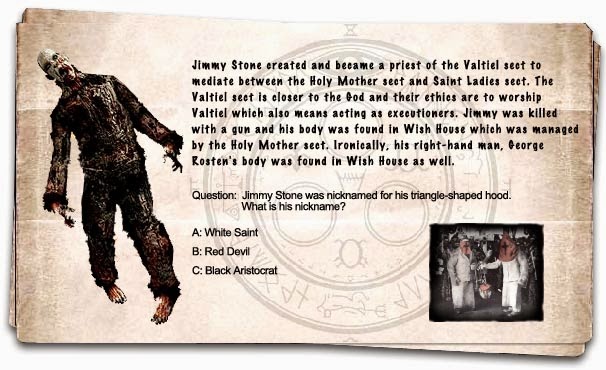
Silent Hill's Jimmy Stone, with a picture of him as the Red Devil

Pyramid Head came from James’s mind… with a little inspiration from the cult.

The Overlook is much more malevolent, but it does just as good a job at mixing Jack’s past with the hotel’s past and even the play he’s working on.

Only two things disappointed me about The Shining. First, I thought the George Hatfield incident was going to have more relevance than just being another dark moment in Jack’s life and the reason he needs a job. Second, there were some scenes where I felt Jack went back and forth a little too much. I enjoyed his struggle between staying true to himself and falling prey to the Overlook, but a few times he switched sides so often in such a short period of time, it felt repetitive.

Otherwise, I enjoyed the novel. It balanced the supernatural and psychological horror aspects quite well, and I recommend it to anyone who enjoys those types of stories.


Works Cited
King, Stephen. The Shining. New York: Anchor Books, 1977. Print.
Oct 012014
 

Ghost Story by Peter StraubI’d never read anything by Peter Straub before, and I was curious about what type of story this novel would be to actually be called Ghost Story. My copy began with excerpts from reviews describing it as a terrifying novel that would give me nightmares no matter how many ghost stories I’ve read before.

As I read Ghost Story, I began to wonder if those reviewers were talking about a different book.

Warning: this review will include spoilers. If you haven’t read Peter Straub’s Ghost Story and don’t want to know about key revelations and plot events, turn back now.

My main issue with the novel is that it wasn’t scary. In fact, it wasn’t particularly interesting. The prologue was good, and made me want to know more about this man and the mysterious girl he kidnapped for reasons unknown. But once we hit the main story, I lost interest in it until around the 300-page mark, when things started happening in the story’s present. If it takes 300 pages for me to become interested… well, I probably wouldn’t have stuck with this one if it wasn’t for class.

The pacing issues didn’t end there, either. After a while, it felt like it was dragging on–like we should have hit the climax and ending already, but instead we had to plod through more scenes to get there. Once the antagonist really started picking off characters, I expected more action, less huge paragraphs of exposition. Throughout the books, the ones I dreaded the most were what I thought of as the “and” chapters, where there would be paragraph after paragraph summarizing events, each starting with “and” while jumping to a new character.

Speaking of the characters, I hated them. For example, when they didn’t seem to comprehend that Milly Sheehan would be upset about Jaffrey–come on, I know they didn’t realize she was in a relationship with him, but they couldn’t even believe his housekeeper would be concerned about more than the “disproportionate amount of money” (169) he left her?–or when Don explained that as soon as he met Alma, she was “already more important” (213) than his then-girlfriend, I found myself wondering how I was supposed to care about the fates of these idiots.

To be fair to Don, Alma probably had him under her spell by then, but there’s no excuse for the rest of the cast to be a bunch of jerks.

Peter wasn’t a jerk, but he wasn’t very interesting, either.

One last thing about the characters–there were too many names. A large cast of characters, along with antagonists who use multiple identities, were introduced too close together. Some of the minor characters I lost track of several times, and I’m not sure if the revelation that Eva Galli was another incarnation of the antagonist was supposed to be a twist or not. I backtracked through the pages to try to find out if they’d already said who she was, gave up, and just assumed she was that same woman.

I liked the general idea of Eva/Anna/Alma/etc. There was great horror potential in the spooky woman connected to each of them, responsible for the death’s of people in their pasts, always there in every story, under a different name.

Then it complicated matters by becoming Alan Wake.

There were enough similarities I wondered if Alan Wake was inspired in part by this element of Ghost Story. I couldn’t find anything to confirm it, but they have many things in common: the plot being influenced by “occurrences from an unwritten book” (316), the antagonist’s ability to warp reality, the attempt to trick the protagonists into believing they imagined it all, and the main antagonist being an evil force in a dead woman’s body with the ability to resurrect and control the dead.

But even if the stuff from Don’s book entering reality seemed to serve no purpose except to make the plot more complicated, it was the last revelation that made the antagonist stop working for me.

In class, we talked about subtle horror versus blatant horror. One idea that came up was how some things lose what makes them frightening when you understand them. This book proves the concept for me. I would have been so much happier if we never really knew what the villain was. As soon as Don revealed she was a shape-shifter, it lost me. Eva/Alma/Anna was much scarier before I knew she could turn into a lynx.

Not only that, but she and her kind are the origin of all ghost, vampire, werewolf, zombie, whatever stories? No, no, no no no.

Maybe it’s because the title made me expect a ghost story. Maybe it’s because, in a story where not a lot of interesting things happened, the creepy ghost lady held my interest. Whatever it is, the truth about her made me cringe, and it was just one more reason to hope for the end of a story that had already gone on far too long.

When I finally did reach the end, it wasn’t satisfying. I realized early on that Don would survive, because the novel had to circle around to reach the prologue. I expected a dark ending from there, a hint that the cycle would continue forever.

And once we reached that ending, it still wasn’t over. It continued on to finish things forever, but after numerous false climaxes where our protagonists fought these deadly foes, Don cutting a wasp to pieces just wasn’t enough payoff to make the ending worthwhile… especially for something called “Ghost Story.”