Operation Backlog Completion 2026
Oct 222014
 
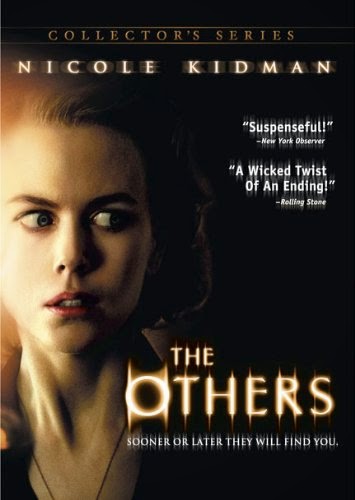
Movie cover for The Others

Judging by the excellent reviews The Others has gotten, I suspect I’m in the minority when it comes to my views on this movie. Fair warning, this review contains huge spoilers. I can’t properly discuss my feelings toward The Others without talking about plot twists and the ending.

So, spoilers ahead. Turn back now if you haven’t seen the movie yet and intend to.

All right, onto the review. My feelings through most of The Others were mixed. It had a lot of religious elements that I expected to go somewhere. I wondered if we were going into demon/exorcism territory, since there was such a strong focus on Catholicism. It didn’t. All it really did was work into the character development of the main character, Grace. I’ll get back to that in a little bit.

At first, I thought Grace would be my main complaint about the movie. I didn’t find her character very likable. In fact, in the early scenes, I questioned the movie’s description for making it sound like the servants were the creepy ones, because it seemed to me they were the normal ones suddenly stuck in an isolated house with this crazy lady.

Things changed, and my opinion changed with them.

Grace was clearly unstable and set in her ways (she tried to get into town to talk to the priest about her haunted house, failed, and then suddenly went back to not believing in the hauntings?), but my sympathy for her grew once the curtains were removed. Her dedication to protecting her children struck me, especially her anger when the servants suggested she expose the children to sunlight to see if they’d grown out of their illness. No, if the alternative to growing out of it is death, you don’t just try and see!

Overall, I liked the mood and atmosphere of the movie. It had a certain ambiguity that might have been better handled if we didn’t see the scenes of the two servants talking to one another about what was going on, but it still created a sense of uneasiness. I especially liked the fog, of course.
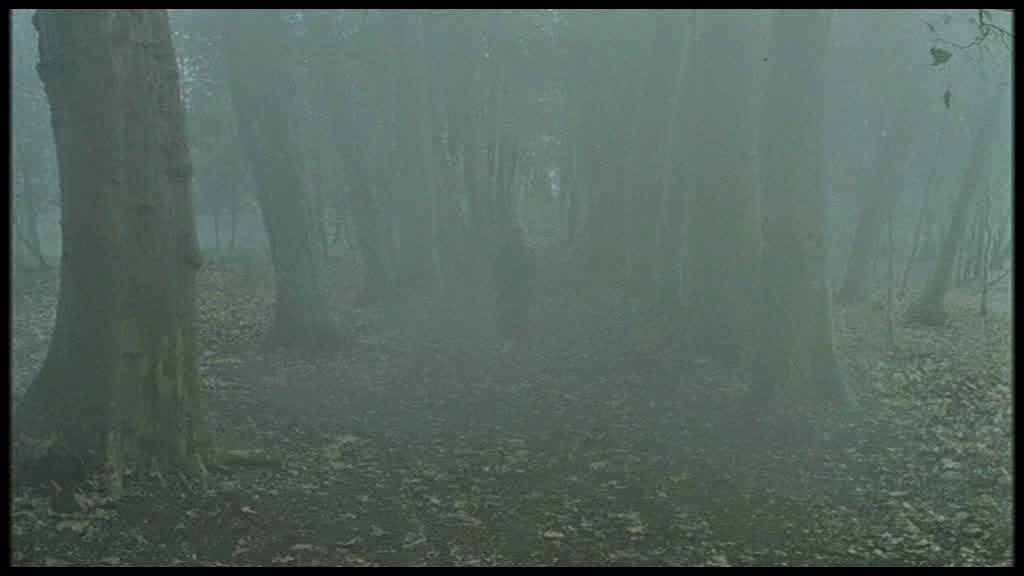
Foggy woods in The Others
Welcome to Silent Hill?

I never found the movie particularly scary, but it handled some creepy scenes very well. My absolute favorite was near the end, when Grace found the picture of the three servants–dead. The juxtaposition of that moment with Anne’s discovery of the gravestones and then the sudden appearance of the three behind Nicholas was brilliant. My opinion of the movie skyrocketed at that point, because it was just so well-executed.

And then it went on to ruin it.

From reading other reviews, I get the impression people generally liked the final twist. I didn’t. I hated it. And unlike Professor Layton vs. Phoenix Wright, The Others wasn’t enjoyable enough to make me overlook the twist and still recommend it. Not only are the servants dead, but Grace and the two children are also dead. The incident no one wants to talk about is when she smothered them and then killed herself. The supposed ghosts disturbing them are actually the new owners of the house and a medium, trying to investigate the haunting.

It’s an interesting twist on the usual sort of ghost story, I’ll grant it that. I just didn’t like it.

For one thing, is it supposed to have an anti-religion message? Instead of religion being used to fight ghosts, the most religious character is the woman who went crazy (why is never fully explained), killed her children, and committed suicide. Once she learns the truth, she doubts her beliefs and says she doesn’t know if limbo exists. I really expected her to answer the question by saying they’re in limbo (which wouldn’t make sense, but it would have worked if Anne asked about purgatory instead), but instead she just says she doesn’t know it exists.

Why was religion such a focal point in the first place? It meant nothing to the overall plot. I actually expected it to play a role in the scene when Grace asked her husband why he fought in a war that had nothing to do with him instead of staying with them. I thought that was the perfect parallel to Anne saying that she would have denied Christ so the Romans wouldn’t kill her, and that the comparison would be brought up by someone in the movie. But no, it wasn’t.

To me, the religious stuff seemed to have no purpose but to be denied in the end. If anyone else has another explanation, please let me know.

But aside from the dubious role of religion, I just didn’t enjoy the twist. It took away from the impact the earlier (and much better) twist had and ended the movie on a dark, bittersweet note.

Also, why was it called The Others when the characters most often referred to them as “the intruders”?

Jul 072014
 

When I talk about fiction, I focus in on the villains a lot. Villains can make or break a story for me. I can’t discuss Final Fantasy XIII without complaining its main antagonist, who is one of the least compelling villains I’ve ever seen. I’m still not sure if the big reveal about his identity was supposed to be shocking. It had zero impact on me, because the character barely had a role in the story before that point.

ASSUMING DIRECT CONTROL

ASSUMING DIRECT CONTROL

And when he was on the screen, he was just…there. The game wanted me to hate him, but didn’t lend any fuel for my hatred. Even though he was the primary villain, he lacked presence. I often contrast him to Mass Effect 2’s Harbinger, who was off-screen for almost the entire game, but still made himself felt throughout the story.

The lack of a compelling villain is also one of my many complaints about Sticker Star, which couldn’t seem to handle Bowser as an actual character.

So, I complain about bad villains an awful lot, but what about counter-examples? It’s an important question for me as a writer, too. What makes a villain compelling?

I could be here all day writing about that. I wrote an entire paper on Iago from Othello. You want a compelling villain, take a look at the guy that made me slam shut my copy of Shakespeare to shout at the characters to stop listening to this guy already. Many of the works I’ve commented on favorably (Amnesia: Justine, Arsenic and Old Lace, Ace Attorney, Professor Layton, and even I Am Legend, believe it or not) have villains/antagonists that work. Of course, I can’t list everything that has a great villain, so go ahead, ask me if I like the villain in such-and-such.

But today, we’re not going to discuss a manipulative mastermind like Iago, or a cool swordsman like Descole. We’re going to jump back to a movie made in 1953 and discuss the informant in Stalag 17. (I will refer to him as “the informant” throughout this post, so you can keep reading even if you plan to watch the movie.)

This is an unusual example, because there isn’t a lot of on-screen villainy–which makes it an excellent example. Similar to Harbinger, Stalag 17’s informant becomes a sinister and compelling figure from the shadows. And just like any story with a mystery around its villain’s identity, the truth forever changes the way you view the rest of the movie.

And for me, it changed the way I hear a song.

There’s a Civil War song called “When Johnny Comes Marching Home.” It’s not as big as some of the other patriotic tunes, but you might have heard it. The basic idea is that the soldiers are coming home, so let’s celebrate! It’s upbeat, optimistic, and all around cheerful.

So why does it give me chills? Because it plays during the scene in Stalag 17 where the informant is revealed to the audience. I often prefer when the audience and protagonist find out the villain’s identity at the same time, but Stalag 17 is an example of how it can work to show the audience first.

If you’re unfamiliar with the term, a Stalag is a German POW camp. The movie is set during WW2, and opens with two prisoners trying to escape Stalag 17, only to be shot by guards waiting for them. The remaining prisoners know someone among them must have told the Nazis about the escape plan. Their suspicion falls on a prisoner named Sefton, because he’s a jerk. (I don’t like Sefton, okay?) He starts the movie by making a bet that the escapees won’t get very far, and he openly trades with the Nazis. He’s the obvious suspect–but who is the informant really?

The following video shows the informant using the secret communication method he has with the Nazis, so if you don’t want to see spoilers for Stalag 17, don’t watch this clip.

Click for spoiler

By the way, even though he’s actually a Nazi, not a real prisoner, I’ll still call him a traitor. He’s betraying people he’s lived alongside and pretended to be friends with. I once got into a debate over whether or not he’s really a “villain,” since he’s just doing what’s right for his side. Yeah, he’s a bad guy. We see no sign of any moral struggle at all in him. I’m a big fan of sympathetic villains, and this guy is absolutely not one.

Whenever I hear that song now, all I can see is the informant joining the celebration. Singing along with the men he’ll happily betray and send to their deaths. It gives me chills. That one little scene carries more weight than anything FFXIII or Sticker Star managed to do with their villains, even though he barely did anything on screen. It’s all built up to that point–the deaths of the prisoners, the blame falling on Sefton, the betrayal of another prisoner who joins them partway through the movie.

You hate the informant for what he’s done, even though you don’t know who he is, and when a face is given to the traitor, you hate him even more. The scene itself is also well-crafted. While music is often used to enhance the atmosphere, the dissonance between “When Johnny Comes Marching Home” and the informant’s actions works well. The actor also does contributes to the effect. His casual, yet deliberate, movements heighten the tension and make you wonder if anyone will notice. Even though I don’t write mysteries, I do like to have surprise villains. This is the sort of feeling I want to achieve in my audience–dread and hatred for a villain even when the character isn’t on the page. I want my villains to evoke emotions. Whether it’s a sympathetic villain the audience will like and almost root for, or this sort of unsympathetic villain the audience will long to see destroyed, I want the audience to feel something for them. In short, I want my villains to be more like Iago, Harbinger, and the informant, not like FFXIII’s villain and Sticker Star’s almost non-existent Bowser.

If you’re intrigued by what I’ve talked about today, you can always watch Stalag 17. It’s not one of my favorite movies, but it’s a good one, especially for this scene.

Oct 312013
 

Do you know what tonight is? What’s that? Halloween? No, I mean what else is it? Mike Collins‘s birthday? Well, yes, but besides those two things, what else?

You don’t know? Don’t you smell the Sour-Sweet Wind coming? It’s Grinch Night!

Grinch Night is a short animated movie, also known as Halloween is Grinch Night. Whenever the Sour-Sweet Wind blows, it sets off a chain of events that gets the Grinch’s attention, and he goes on a rampage to destroy everything in his path and wreak general mayhem. Everyone in Whoville knows that they need to stay inside and lock their doors to be safe, but young Euchariah Who needs to “go to the euphemism” and ventures out on Grinch Night.

Euchariah gets horribly lost and runs into the Grinch, and then he decides that it’s up to him to protect Whoville by delaying the Grinch until the Sour-Sweet Wind stops and Grinch Night is over.

This might be my favorite Dr. Seuss movie. It’s filled with general wackiness, memorable lines, and a particularly creepy climax when Euchariah stalls the Grinch by facing the horrors of the Paraphernalia Wagon, which shows what happens when Dr. Seuss tackles Halloween.

The whole movie is just about a half an hour long, and it’s available on DVD now in a set with other Dr. Seuss stories, so check it out!


Buy Grinch Night from Amazon