Operation Backlog Completion 2026
Jan 162023
 

It’s been two years since I finished Utawarerumono: Prelude to the Fallen, the remake of the first Utawarerumono game.

Now I’ve moved on and played the second game, Utawarerumono: Mask of Deception.

(I played it on the Vita, but digital copies were delisted and good luck finding physical copies.)

Utawarerumono is often considered a trilogy, but it might be more accurate to describe it as a game with a sequel duology. The original Utawarerumono came out in 2002, only in Japan, and tells a complete story. It was followed by Mask of Deception and Mask of Truth in 2015 and 2016, respectively.

Of course, the original was then remade as Utawarerumono: Prelude to the Fallen, which makes it much easier to approach the three games as a trilogy.

Like the first game, Mask of Deception is a visual novel strategy RPG, and I’d say the focus on the visual novel side is even stronger this time. You can spend hours of reading without encountering a battle. When combat does happen, it’s fun enough, but certainly not the game’s big draw.

I got off to a bad start with the game when I couldn’t save in the middle of a scene but had to restart the scene when I loaded my save, but it turns out that’s only an issue for scenes that use the 3D character models. Regular visual novel scenes can be saved and loaded just fine.

You play as Haku, a man with amnesia, and while that sounds similar to the premise of its predecessor, it goes in a different direction. After a woman named Kuon saves Haku from monsters (and gives him the name “Haku” since he can’t remember his own), the two decide to travel together and eventually end up at the capital, with a variety of eccentric characters joining their little group along the way.

It has several connections to the first game, but this entry feels accessible even without that knowledge. However, I’ve gotten the impression that the third game in the series will expect you to have played both previous ones.

The majority of Mask of Deception is fairly lighthearted in tone, with a lot of humor and silly situations. Some of the gags get a little repetitive, but every now and then it would surprise me with a very funny scene. It’s a slow burn that introduces you to its characters and sets the foundations for its world. But when it gets serious, it doesn’t hold anything back. The ending felt like a punch in the stomach coupled with a demand that I play the sequel.

And that’s why I began by discussing the structure of this trilogy. While Mask of Deception does eventually introduce and resolve a major conflict, it feels less like a sequel to Prelude to the Fallen and more like the first half of a sequel. It’s like the Great Ace Attorney situation, where the first game sets up the story to be resolved in the second. Here’s hoping Mask of Truth does as good a job.

In short, I enjoyed Utawarerumono: Mask of Deception, and now that the stakes have really been built up, I’m looking forward to starting Mask of Truth to see what happens next.
Jan 132023
 

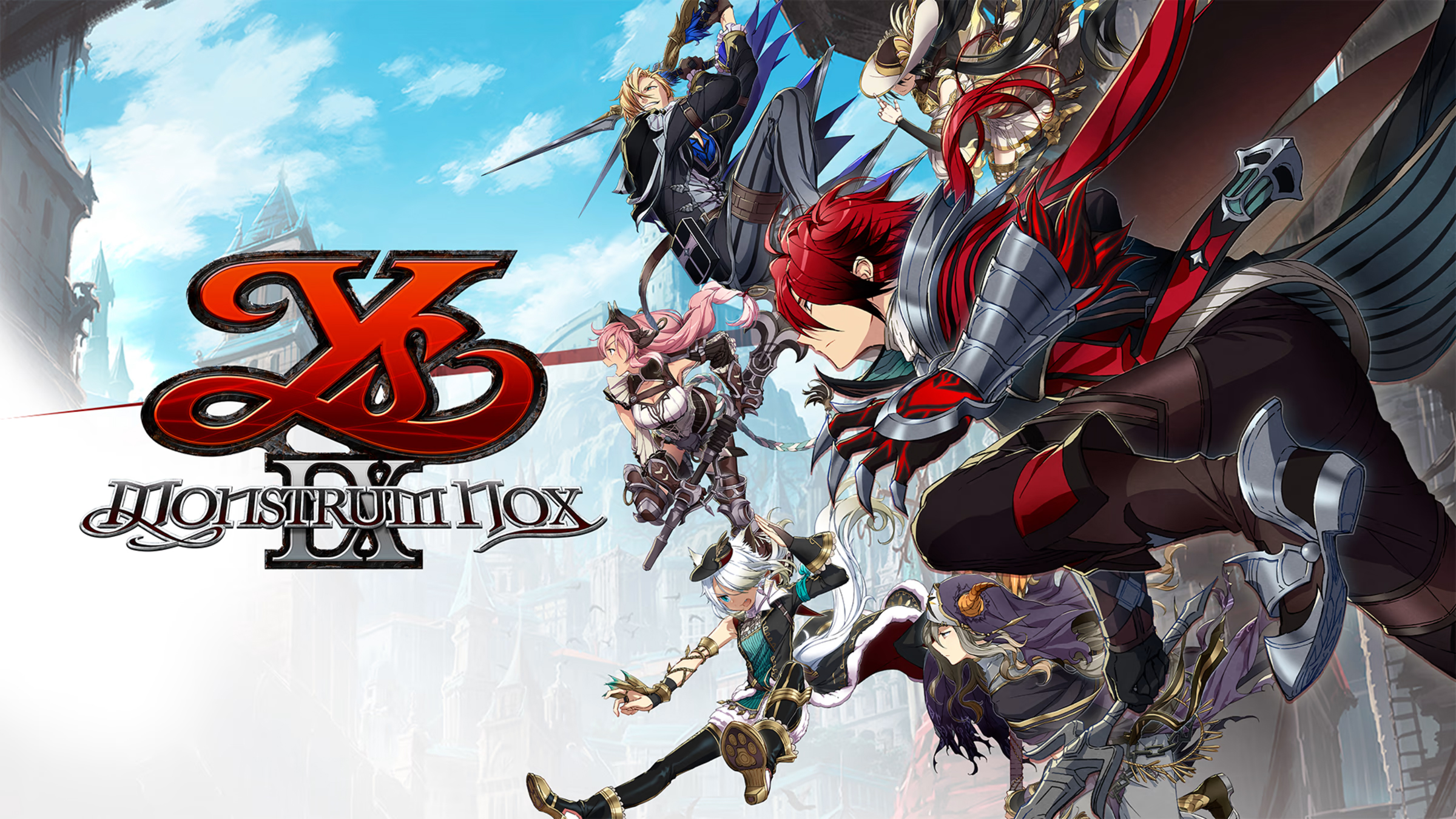
This morning, I finally finished Ys IX: Monstrum Nox, which I started last year but put on hold for a while.

This is only the second Ys game I’ve played, which I regret in some ways because I could tell certain moments were meant to be callbacks to previous entries, but it was still an enjoyable and largely standalone story.

Ys IX sees adventurer Adol Christin arriving at the prison city of Balduq, where he is immediately arrested. While trying to escape the prison, a strange encounter leads to him becoming a Monstrum, someone with supernatural powers bound to the city of Balduq to fight in the monster-infested alternate world of the Grimwald Nox.

What this means from a gameplay perspective is that you have a bunch of special abilities to help you explore the city. Adol can now zip to special vantage points, and as more party members join you, you gain additional Monstrum skills, such as running up walls and gliding. The Monstrum curse keeps you confined to certain areas at first, but as you complete quests and fight enemies in the city, you’re able to break these barriers.

This was probably my favorite part of Ys IX. I loved being able to explore more of the city each time I gained a new ability, and gradually opening up new sectors kept it from feeling too overwhelming. The city is also filled with collectibles, making its exploration remind me a bit of the 3D platformers I love.

Meanwhile, the weakest link is the Grimwald Nox. A cursed alternate dimension under a blood-red moon sounds fantastic, but in practice it just means you fight waves of enemies while defending a giant crystal. These sections can be fun, since your entire party participates while other allies lend support, but I would have much preferred being able to actually explore the Grimwald Nox realm.

Between the curse and the Grimwald Nox itself, though, this aspect of the story lends almost a gothic horror flavor to some parts, which I appreciated.

The story is interesting enough, with an element of mystery that had me curious for quite a while about what was actually going on, and the characters are likeable. There are plenty of NPCs throughout the city whose dialogue changes as the game progresses, as well.

Overall, I enjoyed playing Ys IX: Monstrum Nox. I’m looking forward to learning more about the recently-announced Ys X, and maybe I’ll have even caught up a bit more on the series by then!

Jan 112023
 

Tales of Symphonia Remastered is due out for the Switch, PS4, and Xbox One on February 17, and lately fans have been talking about the potential for other remasters.

In the official Q&A on the website, Bandai Namco says the following:

Will there be future remasters or remakes of older Tales titles?

We really appreciate the enthusiasm shared by Tales fans worldwide on wanting to experience our portfolio of games on modern platforms. As of now, we are focusing wholly on the release of TALES OF SYMPHONIA REMASTERED, though we are always happy to hear what our community would love to see for future games.”

That’s not exactly a clear indication that anything is going to be remastered. However, I take confidence from the fact that they highlighted it as a question on their own. When that sort of vague answer is given during an interview, it often feels more like they just don’t want to shut down the possibility, but here it’s something they specifically brought up.

(Why exactly this is coming up now when that Q&A is from November, I’m not sure. I’ve seen people translating the Q&A from the Japanese site, but they seem to be the same answers.)

Personally, I’d like the next Tales remaster to be one of the games not released outside of Japan yet, so that we get another chance at getting it. As I mentioned in my updated list of untranslated games I’d love to see get localizations, Tales of Destiny 2, Tales of Rebirth, and Tales of Innocence R are some of the most notable Tales games not released in the west yet.

One by one, games I’ve wanted to see localized have gotten new, translated releases. Will one of the older Tales games be next? Or do you think something like Tales of Xillia will be the next choice for a Tales remaster?