Back in December, Capcom listed Mega Man, Devil May Cry, and Ace Attorney as IPs they wanted to grow.
The stated plan was to use new games, remakes, etc. to get these three IPs on the same level as Resident Evil, Monster Hunter, and Street Fighter.
This news became more exciting after last year’s Game Awards, where Capcom announced a new Mega Man game.
Now Capcom has released a new financial report, and that goal has been reiterated. This time, the list of brands they want to become “the next engine of growth” includes not only Ace Attorney, Mega Man, and Devil May Cry, but also Onimusha, Dragon’s Dogma, Okami, and Dead Rising.
(We know an Okami sequel is in the works, and Onimusha: Way of the Sword is due out this year.)
That sounds pretty promising for Ace Attorney after all. With the full series (aside from the crossover) now on modern platforms, a new game feels like the logical next step to grow the IP. I know I’ve been optimistic for years now, to the point where it starts to feel baseless, but this really does feel like a positive sign.
Unfortunately, the report also includes a page about using generative AI. At least it sounds like they only intend to use it for “routine tasks” rather than creative work, although “draft generation” being on the list has me wary.
Anyway, what do you think about the latest news from Capcom’s financial report?
In a recent broadcast, Dragon Quest series creator Yuji Horii said there will be an anniversary live stream on May 27.
As reported by Gematsu, this will include “an announcement about the next game,” along with other news.
This sounds like the next game in the series is ready to be announced…
…except it already was. Exactly 5 years before the upcoming live stream, in fact.
It was all the way back on May 27, 2021 when the 35th anniversary live stream included several announcements, including Dragon Quest III HD-2D, Dragon Quest Treasures, and yes, Dragon Quest XII: The Flames of Fate.
What followed were a lot of questions, from what they meant by calling Dragon Quest XII a Dragon Quest game “for adults” and what the “renewed” combat system would be like.
Fans worried that Dragon Quest XII would be dark and edgy, that it would have action combat, all sorts of worries based on those unclear statements when it was announced… and you know, we still don’t have any answers. We have yet to see anything at all about Dragon Quest XII. The last update was an interview in 2023 where Horii cited the pandemic as a reason progress on the game was slow.
Now here we are in 2026, approaching the 40th anniversary live stream, where “the next game” is set to have an announcement. Will we finally see Dragon Quest XII? Will we see a completely different Dragon Quest XII instead? Or is the new announcement for another remake or spin-off?
Whatever the case may be, I hope the game looks good. What do you think will be shown at the live stream?
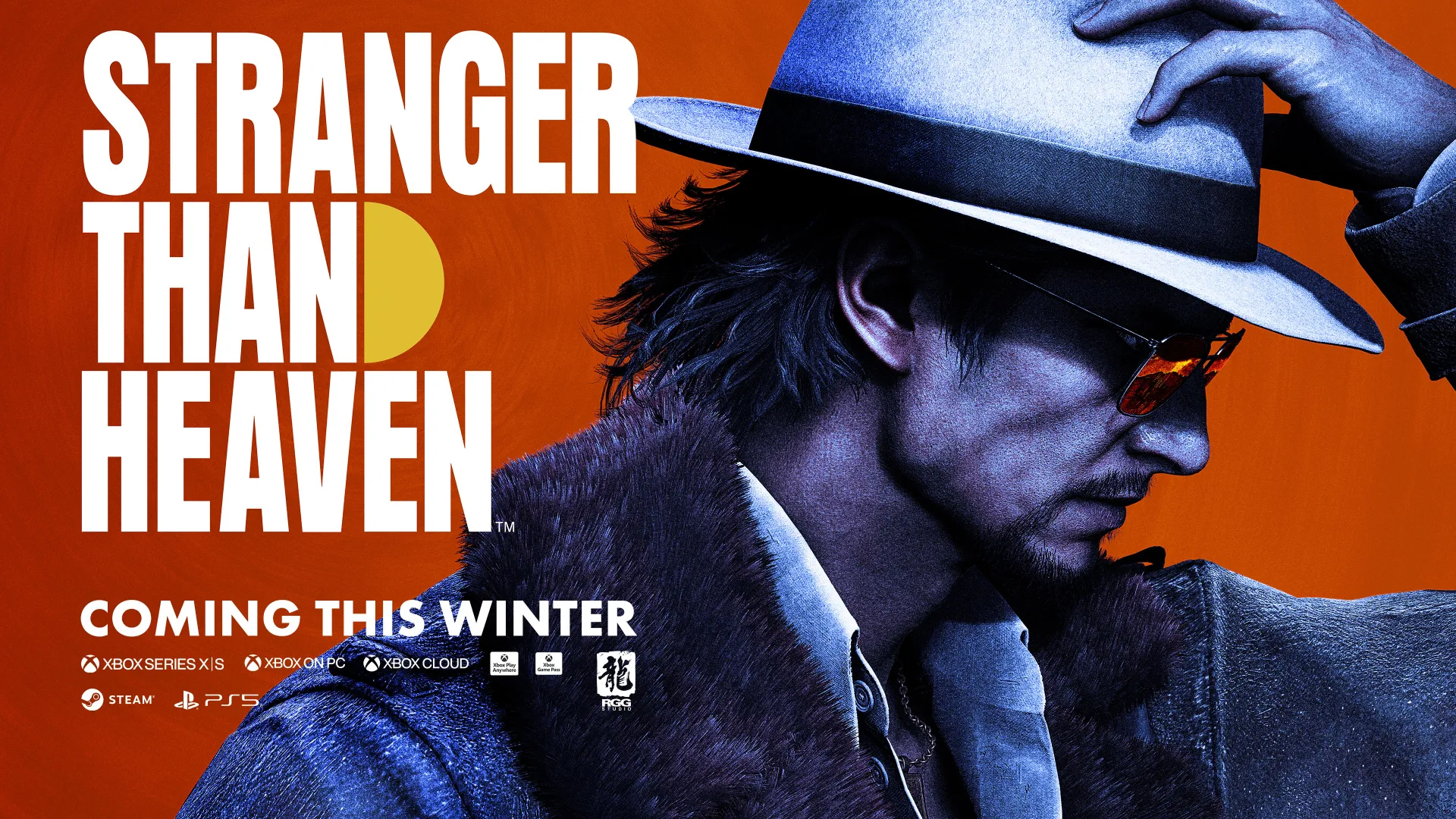
All right, the Stranger Than Heaven showcase provided us with the deep dive they promised, and now it’s time to lay some theories to rest.
There’s nothing supernatural going on. It’s not even a separate universe from the Yakuza series.
In fact, it appears to be a prequel story that will include the origins of the Tojo Clan.
I’m one of the people who didn’t want that; I’d hoped Stranger Than Heaven would be a whole separate IP. So when the new trailer almost immediately mentioned the Tojo Clan, I was a little disappointed. However, the trailer and showcase were so good that I came around on it. I’m excited for Stranger Than Heaven again.
Let’s start by taking a look at the new trailer.
That is a good trailer.
For all my ambivalence when they immediately brought up the Tojo Clan, the rest of the trailer really caught my interest and left me intrigued about what’s going to happen in this game.
Our main character, Makoto, is half-Japanese and half-American. He sneaks onto a ship heading for Japan in 1915, and that’s where our story begins. I’d previously questioned if we were going to visit the game’s different eras in order, and it sounds like we will after all. We’ll be traveling through 5 different eras as Makoto rises up from his meager beginnings.
The subsequent showcase went into more detail about the game, and what really took me by surprise is the showman aspect.
Makoto becomes a showman and scouts singers and performers. On top of that, there’s a gameplay mechanic where you can pick up different pieces of audio, like the sound of a train or someone snoring, and work those sounds into new pieces of music. It sounds pretty detailed, and I’m not sure if this is an optional side activity or actually a central part of the story, because it seems pretty important.
Meanwhile, even though combat looks like a more visceral version of Yakuza combat, it sounds like it’ll be fairly different, because you use different buttons to attack with the right or left sides of Makoto’s body.
One other thing that stands out as unusual about Stranger Than Heaven is that unlike recent Yakuza releases, there won’t be separate dub or sub options. Instead, some characters will speak Japanese while others speak English, just like in the trailer. Infinite Wealth already did that a little bit, but it sounds like this will take it even further for immersion.
So, after all of this, I’m excited for Stranger Than Heaven. The story sounds interesting, the gameplay seems intriguing, and even though it’s tied to the Yakuza series after all, it has a ton of potential. It does seem a little weird that Snoop Dogg is playing a character, but it’s not like they haven’t cast celebrities before.
Finally, while it doesn’t have a release date yet, it has a release window of “this winter.” Whether that means this year or early next year remains to be seen.

 Back in December, Capcom listed Mega Man, Devil May Cry, and Ace Attorney as IPs they wanted to grow.