Operation Backlog Completion 2026
Jan 092019
 

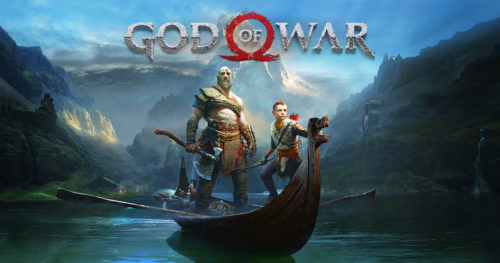
While I didn’t finish the new God of War in time for my list of the top games I played in 2018, I finished it early this year and it was as good as I’d hoped it would be.

And it carried on the legacy of the previous games.

One of the main reasons I decided to play the previous God of War titles first (in addition to wanting to see the fully story and character development) was because I wanted a better appreciation of the changes.

As a Resident Evil fan, I’m sensitive to series making radical gameplay changes… but to my surprise, while the new God of War definitely plays differently, much of it felt familiar. Combat is slower, but you’re still using a mix of light/heavy melee attacks, ranged attacks, and special attacks, although with less magic and a greater emphasis on fighting a handful of enemies at a time instead of a mob.

Click for God of War (2018) spoilers
Once you get the Blades of Chaos, it feels even more like the originals despite the over-the-shoulder camera.

The focus on puzzles was lessened, with the bulk being for opening chests rather than progressing through the story, but there were still lots of little things that felt like the God of War formula evolved to fit the new game.

For me personally, it felt like it took everything I liked the most about the originals and gave me more.

Exploration? Now there are whole optional areas to explore, with their own treasures and collectibles and side quests, instead of just occasional secret areas with chests.

Lore? I loved the little world-building notes in God of War and God of War III, and God of War (2018) ramped it up with lore shrines and journal entries for just about everything in addition to the occasional little notes.

Story? It has more of a focus on story and character interactions than ever, largely because Kratos isn’t journeying alone, so he has someone to interact with almost all the time. This allows for many smaller moments of storytelling, rather than restricting it to the major cutscenes.

One thing I hadn’t been expecting was the sense of humor. The new God of War is much funnier than the previous games, with Kratos’s grumpiness and general lack of humor contributing to the humor as much as anything else. Really, the character interactions in this game were fantastic.

So I loved the characters (especially Atreus), and I enjoyed the story – even more so as I remembered bits and pieces of Norse mythology, which had gotten rather fuzzy in my memory over the years.

Click for major God of War (2018) spoilers
Including one point where I was away from the game doing an entirely unrelated task and my thoughts abruptly went something along the lines of, “Mistletoe… mistletoe arrows… Isn’t there a thing about–MISTLETOE IS THE ONE THING THAT CAN KILL BALDUR! ATREUS IS GOING TO SHOOT HIM WITH THE ARROWS!”

and then I was crushed when Freya burned my arrows.

Speaking of which, I appreciate a lot of their attention to little mythology details. I thought they’d just changed mythology to make Freya Baldur’s mother for a twist, but apparently there are scholars who believe Freya and Frigg came from the same goddess originally.

Also, Laufey -> Fey -> Faye. Even if I remembered the name Laufey, I doubt I’d have made the connection, but there it is.

Watching Kratos develop as a character was one of the best parts. He’s come a long way and he’s trying to move on from his past. After everything he’d gone through in the previous games, I just wanted him and Atreus to be happy. And while it might not be that easy, the emotional payoff after having played the previous games was definitely worth it.

Click for God of War (2018) spoilers
The whole sequence when Kratos takes sick Atreus to Freya, learns he’ll need to get different weapons, and rides the boat back to his house for the Blades of Chaos was such an emotionally intense series of events, it gave me chills watching it.

(Also, Helheim, for the obligatory God of War underworld section.)

The story also had some great twists and foreshadowing, and I can’t wait to see what happens in the sequel. I have a few theories of my own, and I’ll be looking forward to news about the next game.

And yes, I know I haven’t played Ascension yet. I decided to skip it after learning it didn’t add much to the overall story. I’ll still probably play it eventually… perhaps this year?

What did you think of the new God of War game? How do you feel about the significant changes it made to the God of War formula?

Dec 102018
 

The fifth and final game included in the God of War Saga collection is God of War: Ghost of Sparta.

When I beat God of War, I unlocked a bonus video that teased the future of the series. That storyline teased there didn’t surface in God of War II. It didn’t happen in Chains of Olympus. It didn’t come up in God of War III. No, they finally brought it back four games later, in Ghost of Sparta.

Set in between God of War and God of War II, Ghost of Sparta was originally released for the PSP, just like Chains of Olympus.

And once again, it features Kratos out for something other than revenge. This time, he’s on a rescue mission.

Haunted by nightmares of his past, Kratos leaves Olympus in search of his mother. When he reunites with her, in a scene adapted from another video unlocked after the original game, she reveals that his brother Deimos is still alive and trapped in the Domain of Death.

(Amazingly, this is the game that breaks the always-visit-the-underworld trend, since the Domain of Death is a separate realm in between the world of the living and the underworld.)

Ghost of Sparta is one of the shorter games in the series, but it has much better pacing than Chains of Olympus does. The gameplay is solid, not quite as smooth as in God of War II and III, perhaps, but with some nice additions. There’s no clear reason why Kratos doesn’t have all of his powers from the end of God of War, although I suppose it would feel contrived if he lost his powers at the start again.

Anyway, this is a much more personal story for Kratos than we’ve seen in the previous games. Not only is he trying to save his brother, but there are also flashbacks to his childhood, showing how he and his brother were separated.

Ghost of Sparta tells a sad story that provides more context for Kratos’s behavior at the start of God of War II, as well as for a few lines in God of War III that reference it. It’s also a deeper exploration of Kratos as a person, with more humanizing moments for him and insight into his past, and it has a lot of great scenes.

Click for Ghost of Sparta spoilers
I loved the part set in Sparta. It felt so strange to see people actually happy to see Kratos. That was nice, finally getting to see how he’s viewed in his home.

…of course, that makes it all the more upsetting that Zeus wiped out Sparta in God of War II.

Even aside from what the gods did to Deimos, I think a major purpose of Ghost of Sparta is to further justify Kratos’s anger.

While it doesn’t have as many epic scenes or battles as some of the previous games, its story is one of the best in the series so far. And that’s it for the God of War Saga, so since I’ve decided to skip Ascension for the time being, I’m finally ready for the new God of War!

What did you think of God of War: Ghost of Sparta?

(Oh, and the Yakuza news teased for Saturday turned out to be an official English title for Project Judge, Judgment, as well as the announcement that it will have an English dub. No release date, but a window of Summer 2019.)

Dec 032018
 

I’ve now played four games in the God of War Saga, since after completing Chains of Olympus, I moved on to God of War III.

The first thing that struck me when I started up God of War III was its graphics. It was the first God of War game made for the PS3, and the jump in technology was obvious.

Everything looked so much more realistic and different than the previous three that it actually took some getting used to. Of course, the increased realism also makes everything much more brutal and violent, so this was by far the most gruesome of the series so far.

The last time we saw Kratos (chronologically, since Chains of Olympus is a prequel), he’d brought the Titans forward through time to wage war against Olympus. All right! Epic battles! Gods vs. Titans! Kratos and the Titans razing Olympus!

…is what I expected.

Instead, it quickly becomes apparent why the Titans lost the war, as the gods just start taking them out. Then Gaia tells Kratos he was just a pawn, which I didn’t expect to be revealed that early, and he falls into the underworld to lose all his powers and begin his newest journey of revenge.

(Again, the developers must have really loved Hades.)

The ghost of Athena tells Kratos he needs to find Pandora’s Box again to claim the one power that remained inside of it, to have the ability to kill Zeus.

And so, Kratos sets out on a journey to find both the box and Pandora herself, who is the key to opening the box now that Zeus has it well-guarded.

Gameplay-wise, it felt pretty good. I might favor the second game’s combat slightly more because of how God of War III ties magic to weapons instead of keeping it separate, but aside from that (and the freefall/dive sections, which I wasn’t a fan of), it might have the most polished gameplay so far.

It also felt like a return to the first game’s style in a few ways, particularly how there were notes scattered around that contributed to the overall story/worldbuilding. It had fewer puzzles, but I really liked the weird optical illusion puzzle in the garden.

Everything fits together neatly into the story God of War III wants to tell, and it really feels more like a story that fits with Greek mythology again.

Click for God of War III spoilers
Hercules is the biggest missed opportunity, though. It’s not just the name–although I was disappointed that a game that loves Greek mythology so much didn’t call him Heracles–but his portrayal.

Kratos is a parallel to the mythological Heracles: sons of Zeus who killed their families due to a god’s meddling and spent years performing tasks for the gods as penance. It feels like Kratos was based on him (rather than being based on the mythological Kratos, oddly enough).

So for the actual Heracles/Hercules to show up… what an opportunity! How will they interact? Do they recognize their similarities?

Instead, Hercules just fights Kratos because he’s jealous of him, apparently at the behest of Hera even though she should be his enemy. His own role in mythology is quietly ignored.

Their conversation does suggest they’ve interacted before, maybe more amicably, so now I really want to see more of Kratos interacting with the gods during his time as the god of war.

But what stood out to me the most is that while Kratos’s hatred for Zeus and the gods takes center stage, there’s a lot more going on in this story. Kratos’s longstanding tradition of sacrificing innocent people to solve puzzles continues, and he kills every god that gets in his way, but he doesn’t always want to. There are multiple scenes where he tries to find a peaceful outcome, but is either forced or provoked into fighting anyway.

God of War III shows Kratos at his most violent, but it also shows his humanity. The second game only touched on it lightly, but here his conflicting nature is back in full force, starting with Hephaestus reminding Kratos that he used to be a father.

This undercurrent runs through the entire story, especially as Kratos begins to interact with Pandora. However, I do think it could have used a few more of those interactions, to make it feel a bit smoother.

Click for God of War III spoilers
Escorting Pandora felt so obviously like the game was shouting, “We’re going to make you care for this character, okay?!” when I would have preferred to see a few more scenes between her and Kratos.

He forms a major attachment to her, and while he’s partly conflating her with Calliope, I think it would have felt more natural as a gradual change.

The dual nature of Kratos as both a vengeful god-killer and a tragic man haunted by his past reaches its peak in the ending sequence. While I wasn’t entirely sure about the ending at first, the more I thought about it, the more I’ve come to like it.

Click for God of War III spoilers
Athena demands that Kratos surrender the power of hope to her. Instead, he stabs himself and hope is scattered across the world.

At first, I wasn’t sure why he did that. Was he trying to redeem himself? Was it another suicide attempt, especially with some of the parallels to the first game?

But Athena’s final cry that humans won’t know what to do with the power on their own made me realize that this was Kratos’s way of trying to free humanity from the gods.

The gods have done nothing but make Kratos’s life miserable. He’s not giving them, even Athena, that sort of power again. Instead, he gives it to humanity to decide their own fates. I like that ending. It’s a fitting conclusion to the saga.

And the whole sequence before that, with Kratos being haunted by voices from his past, the idea that he has to forgive himself to be forgiven, and finally the revelation that he was carrying hope inside of him and that hope is what lets him finally win… it was brilliant.

The first game still has my favorite symbolic portrayal of Kratos trying to overcome his past, but this one is a close second.

Overall, I enjoyed God of War III a lot, and I was surprised by its story. I expected this to be the game that would highlight my earlier impression of the series as “angry Kratos kills everyone,” but instead it gave him a lot more depth than I expected him to.

One last game remains in the God of War Saga collection, so I’ll be moving on to God of War: Ghost of Sparta next… and trying to decide if I should buy Ascension or not.

What did you think of God of War III?